
Conversation is an important part of our day-to-day life. Of many things that can turn down the interest in it, Bad Breath can be a pathetic reason. Characterized by unpleasant odor from the mouth, Bad breath is not only a health issue but also escalates into a mental block, halting your confidence to converse freely. Check out this infographic on Top 10 ways to fight bad breath.
Causes of bad breath:
- Food: Food is a primary source of bad breath. Items such as garlic, onions, spicy foods with curry, cheese filled stuff, fish, acidic beverages like coffee & alcohol can leave a lingering smell or Improperly chewed food can get stuck in the teeth crevices, promoting the growth of bacteria, which causes bad breath odor or Low carbohydrate diets can cause “ketone breath.” These diets cause the body to burn fat as its energy source. The end product of making this energy is ketones, which cause a fruity acetone-like odor on the breath when exhaled.
- Tobacco products: Smoking and chewing tobacco – not only leaves stains, infects gums and causes bad breath, on the longer run lead to oral cancers too.
- Health problems: Sinus infections, pneumonia, sore throat (pharyngitis) and other throat infections, thrush, bronchitis, , diabetes, acid reflux, lactose intolerance, other stomach problems, and some liver/kidney diseases may be associated with bad breath.
- Poor dental hygiene: Poor brushing and flossing techniques leave behind food particles which rot, create odor and may lead to plaque. Plaque build up can cause mild gum infections (gingivitis) which when not treated lead to periodontal gum disease.
- Dry mouth: Saliva moistens mouth and cleans away the dead cells regularly. In Dry mouth condition (xerostomia)our body does not product enough saliva resulting in bad cells staying back leading to bad breath. Too much of breathing through mouth can also lead to Dry mouth condition.
- Mouth infections: Cavities, gum disease, or impacted teeth may cause bad breath.
- Dentures or braces: Dentures in the appliances can trap food partcils and create bad odor. Loosely tied dentures also cause sores and infections.
- Medications: Many medications, including antihistamines and diuretics, can cause dry mouth causing bad breath. Insulin shots, triamterene, and paraldehyde also aid to the odor.
Home Remedies:
Drinking adequate amount of water, clean brushing routine, proper denture care, cleaning your tongue properly every morning to remove dead cells and avoid yeast/fungal/bacterial infections, regular dental check up and avoiding the previously stated causes can prevent bad breath. What are more interesting are the few quick remedies you can form from your kitchen jars.
- Cardamom or elachi is an extremely useful bad breath fighter and can be chewed raw to give your mouth a strong aromatic scent.
- Chew some green coriander leaves after every meal to avoid mouth odor. You can also add a pinch of salt to roasted whole coriander seeds and eat them.
- Chew a handful of cloves, fennel seeds, or aniseeds. Their antiseptic qualities help fight halitosis-causing bacteria.
- Chew a piece of lemon or orange rind for a mouth- freshening burst of flavor. (Wash the rind thoroughly first.) The citric acid will stimulate the salivary glands and fight bad breath.
- Chew a fresh sprig of parsley, basil, mint, or cilantro. The chlorophyll in these green plants neutralizes odors.
- Mix a cup of water with a teaspoon of baking soda and add few drops of anti-microbial peppermint essentials. This will serve as an alcohol-free mouthwash yielding several rinses.
- Tea is a tasty solution to avoid bad breath. The antioxidant polyphenols present in both green and black tea can stop the growth of bacteria responsible for bad breath. Herbal teas available in market are also good to try.
If the problem persists continuously, then consult your dentist for a detailed analysis of the root cause. After all, it is a healthy life style that gives you a breath of freshness.
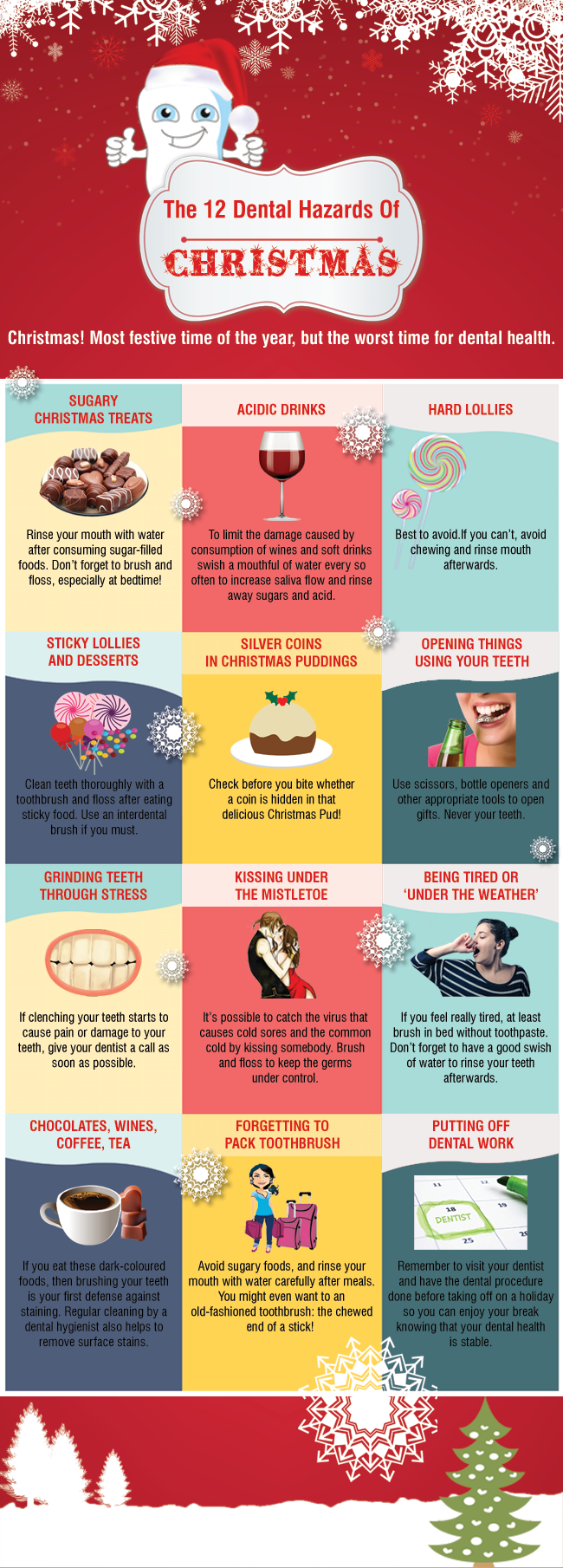
 In case you haven’t fixed an appointment, don’t worry, we have some tips and suggestions to help you keep those pearly whites shining this Christmas season.
 Aren’t you looking forward to the mince pies, cakes, wine, chocolates and a host of other goodies? Christmas is a truly enjoyable time of the year, but it may not be the friendliest for your teeth.
 There is a popular misconception that white wine is less harmful than red wine. However, according to a study by the New York College of Dentistry, white wine is as harmful as red wine. Both these wines are acidic in nature which erodes the teeth enamel. This causes rough patches and groves on the surface of the teeth, making it more susceptible to stains.
 Sugary Christmas Treats
 The expectant mother needs extra calcium for the growing foetus. If the pregnant woman has inadequate calcium intake, her bones will provide calcium for the growing baby needs. The calcium loss will be replenished after the mother stops breastfeeding, but till that time, the extra need of calcium may lead to dental problems in some women.
 You are probably aware that the health of the mouth is connected with that of the rest of your body. Whatever happens in the mouth affects the body and vice versa.