Why you should not take Tooth extraction lightly?

Tooth-extraction

“Ouch! That hurts” is the reaction you spill when your tooth aches. Sometimes it goes off in a day or two, and sometime stay long enough to make your reach your dentist. If a tooth has been damaged by decay or broken by an accident, the dentist might try to fix it with a crown, filling or other treatment. But if the damage is deep, then the tooth might warrant an extraction. Tooth extraction is something we all know about when it comes to us is when the wisdom strikes the need to know more. There are a lot of problems that come along with tooth extraction that you ought to be aware of.

The pain that comes with extraction:

Of 3% to 4% of all extractions, a serious problem called Dry socket develops, when a blood clot doesn’t clog up in the hole or it breaks away too soon. In the case of a dry socket, the underlying bone is exposed vulnerably to food and air, causing pain, bad odor or taste. Dry socket holds a probability of 30% occurrence in case of extractions, especially when they are difficult ones. Smokers and pregnant women are easily prone to this. And women taking birth control pills also run the risk. Smokers and women who take birth control pills are more likely to have a dry socket. Immediate treatment is a must to allow the dry socket to heal soon. A healthy immune system shall prevent the incident of dry socket in the first place indeed.

In addition to this, other potential problems include:

  • Risk of accidental damage to adjacent teeth teeth, such as fracture of fillings or teeth
  • An incomplete extraction, wherein a small part of the tooth/root tip remains after extraction
  • Risk of jaw fracture to older patients with Osteoporosis
  • In case of an upper molar back tooth being removed, at times it might leave a hole in the sinus that will lead to infection
  • A rare yet a huge risk of a long lasting numbness of the lower lip and chin due to the damage of the alveolar valve. The numbness can stay from weeks to months to years, and the worst case is sometimes it can remain permanent too.

The right-care at the right time:

With such risks and complications associated with tooth extraction, by now you understand it is not as simple as it sounds. As in the matter of all health problems, especially when it comes to your dental health, it is important that you take the right steps at the right time to avoid painful consequences. With our team of experienced dentists available round the clock all through the year, Rainbow Dental from Sydney takes pride in providing you the best of the treatment when it comes to tooth extractions. So when the next time when it comes to a painful tooth extraction that you are worried about, rest your concerns and step in for a free advice with Rainbow dental. With the root problem traced, the rest is all a cake-walk fro us to help you through.
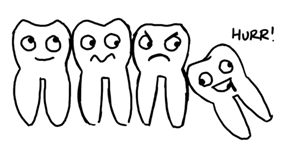
The Truth Behind Wisdom Tooth

wisdom tooth

You would be taking your routine dental check up and when it’s almost done, your doctor opens up, “Well, it seems your wisdom tooth is showing up. Looks like we have to do something about it”. Now don’t get all excited about it as the name goes. Wisdom tooth doesn’t signify any wisdom attached to it. So what is this wisdom tooth anyway? Why is there a tussle of thoughts in choosing whether to let it be or take it off? Lets find out.

By the way, what is Wisdom Tooth?

Wisdom tooth is the one that appears in the far back end of the jaw during the age of 17-25 (called the age of wisdom and hence the name). Not everyone develops the third set of molars, but research says about 90 percent of people have at least one impacted wisdom tooth, meaning there’s not enough space for it to break through the gums. The average person can have four wisdom teeth, although it’s possible to have more, says Dr.Rebecca, an oral surgeon from Auckland. She removes up to 1000 wisdom teeth a year and once treated a patient with nine she said. Crazy numbers you see.

How to spot the Wisdom tooth issue?

One can feel wisdom teeth pain at the back of the mouth, behind the molars. Looked into a mirror, one may even notice the wisdom teeth beginning to poke through the gums. The area might also be red, enflamed and tender to the touch.

What to do with the wisdom attained?

Wisdom teeth removal may be necessary if you experience changes in the area of those teeth, such as:

  • Mild Pain at the start and severe spasms progressively
  • Repeated infection of soft tissue behind the lower last tooth
  • Cysts (fluid-filled sacs)
  • Tumors
  • Damage to nearby teeth
  • Irritation when biting in the adjacent teeth
  • Gum disease
  • Extensive tooth decay

Wisdom teeth need not be removed if they are:

  • Healthy
  • Grown in completely (fully erupted)
  • Positioned correctly and biting properly with their opposite teeth
  • No irritation in the adjacent teeth
  • Able to be cleaned as part of daily hygiene practices

So what’s the wise move?

“To keep it or extract it depends on situations. But the worst thing is to ignore it”, says Dr.Rebecca. She adds on saying, “It is fine as long as there is space and room for the teeth to stay. But in case of pain or trouble which when left untreated can lead to periodontal disease that infects gums and dents in further molar complications”. But guess what’s worse? It is said that 25 percent of the population with asymptomatic wisdom teeth develop periodontal disease too without even knowing they have the wisdom tooth issue. It is best to look out for symptoms at the earliest stage and reach out to your dentist, for it becomes complicated to operate once the wisdom tooth sets in. At times, as the case goes without any symptoms too, it is wise to maintain a regular dental check up round the year regularly. That’s the true wisdom you can provide to your tooth.

Call Now, We're Available (02) 8021 5285 Book Online