
Porcelain veneers are thin shells of tooth colored porcelain that can be chemically bonded to the tooth to hide any aesthetic issues such as cracked, broken, chipped, discolored, or slightly misaligned teeth.
Your annual health fund dental benefits will expire by 31st December
It’s the end of 2015 already. As the year ends, so do your private health insurance benefits.
Most annual health fund dental benefits expire by 31 December, 2015. Have you made a claim for all your entitlements this year? If you haven’t, now is your chance to use up your entitled health fund benefits before they run out.
Invisalign Invisible Braces Infographic
Invisalign takes a contemporary approach to straightening teeth, using a customized series of aligners created for you and only you. In this infographic, we will show you how to achieve a great smile by using Invisalign Invisible Braces.
Bone Grafting Procedures in Implant Dentistry
Technology advances in dental implants has made it possible to rectify and reconstruct various dental issues. One can replace and re-grow new teeth in place of broken or missing teeth. In the past couple of years, bone grafting has developed into a major implant dentistry procedure. The outcome of this procedure has redefined dentistry and dentists are now able to achieve results which were not possible before.
10 Dental Tips for Healthy Halloween 2015 Infographic
Halloween is mostly for children means bags of free candy and a chance to build a stockpile of sweets for the winter. No surprise, Halloween can also present parents with a variety of health and safety challenges.
This infographic shows 10 ways you can help your children’s dental health during Halloween and year-round.
INVISALIGN® TOP 10 FAQS
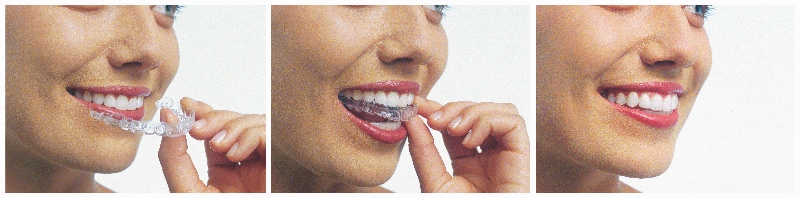
WHAT IS INVISALIGN?
Invisalign is the clear alternative to braces that can help you achieve a straighter smile. Invisalign uses a series of clear, custom-made aligners to gradually move your teeth into their desired position. These aligners are virtually invisible, comfortable to wear and easy to remove. Simply take them out for special occasions and brush and floss as normal throughout your treatment. Invisalign is the modern and hygienic way to straighten your teeth.
HOW DOES IT WORK?
Using the latest in 3D imaging technology, your dentist or orthodontist can depict the complete series of movements your teeth need to go through to achieve a straighter smile. A series of custom-made aligners are then produced, which you simply change yourself every two weeks to gradually move the teeth.
HOW LONG WILL TREATMENT TAKE?
The length of treatment is dependent on the severity of each individual patient’s orthodontic issues. Treatment may vary from anywhere between six months to two years. The average treatment time is between 12 to 14 months.
HOW MUCH DOES INVISALIGN COST?
In most cases, the cost and treatment time of Invisalign is comparable to traditional braces. However, as with other medical treatments, only your dentist or orthodontist can determine the cost based on your specific needs. Other factors may include your treatment goals, the difficulty of your case, how long you are in treatment, your orthodontic insurance coverage and additional factors determined by your dentist or orthodontist.
DOES INSURANCE COVER INVISALIGN?
If your insurance policy has orthodontic coverage, Invisalign should be covered to a similar extent as conventional braces. However, as medical benefits differ significantly from policy to policy, you should check with you health fund.
WILL INVISALIGN TREATMENT BE PAINFUL?
Most people experience temporary, minor discomfort at the beginning of each new stage of treatment. This short-term effect is normal and is typically described as a feeling of pressure.
WHAT ARE THE ALIGNERS MADE OF?
Aligners are made of clear, strong, medical grade, non-toxic plastic. They are smooth, comfortable and virtually invisible. They are so discreet, many practitioners describe them as ‘contact lenses for teeth’.
WILL WEARING THE ALIGNERS AFFECT MY SPEECH?
Like all orthodontic treatments, aligners may temporarily affect the speech of some people, and you may have a slight lisp for a day or two. However, as your tongue gets used to having aligners in your mouth, any lisp or minor speech impediment caused by the aligners should disappear.
HOW OFTEN DO I HAVE TO SEE MY DENTIST OR ORTHODONTIST?
Once in treatment, you will need to schedule regular appointments with your dentist or orthodontist which will usually occur every 6-8 weeks. It is necessary to check-in with your treating dentist or orthodontist to ensure that your treatment is progressing as planned.
WHAT IS THE MINIMUM AGE THAT INVISALIGN CAN TREAT?
Almost all teenagers over the age of 14 are eligible for Invisalign treatment as long as their 2nd (12yr old) molars are fully erupted.
What makes Titanium the ideal choice for dental implants?
Dental Implants and Titanium
The most biocompatible of all metals, titanium is the doctor’s choice as a biomedical tool. First used in surgery in the 1950’s, titanium is beneficial and is widely accepted by medical practitioners, patients, and engineers. Dental implants are a more cosmetic alternative to dentures, replacing missing teeth. Every implant consists of two parts – the base that is integrated with the jaw bone and the crown that is shaped like a tooth. So in majority of the cases, the root is made of titanium and the crown is made of ceramic. But why is titanium a common favorite among dental surgeons?
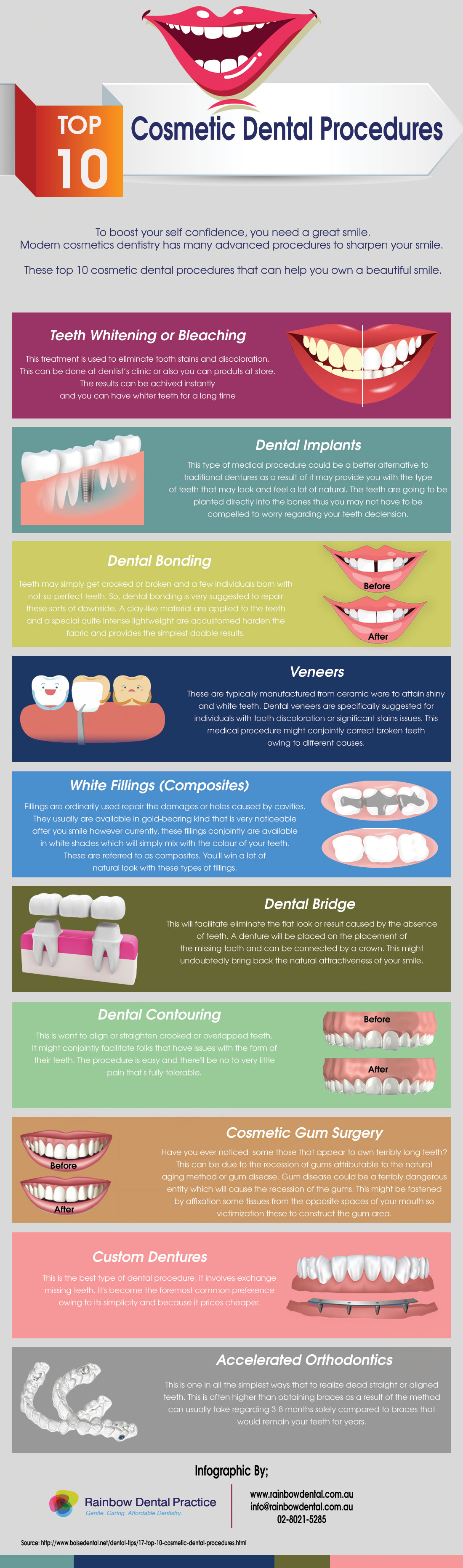
Top 10 Cosmetic Dental Procedures – Infographic
A great smile typically acts as a booster for your self confidence and modern dentistry has enabled several advanced procedures to reshape your smile. You have to consult your dentist to work out that which cosmetic dental procedure is best for your desires.
This infographic shows top 10 foremost common cosmetic dental procedures that may assist you own that stunning smile.
What are Some of the Common Reasons for a Dental Emergency Visit?
A dental problem that requires someone to call on the dentist immediately is considered a dental emergency. There are many causes that necessitate a hurried visit to the dental clinic.
The most common cause of dental emergency visit is pain. Pain could be caused due to several reasons.
Pain is a physiological response which tells us that something is wrong somewhere. Toothache is a kind of pain occurring in or around a tooth. It ranges from mild to severe. When the pain is unbearable it calls for an emergency visit to your dentist or dental department in a hospital.
Sharp pain while biting on food
Pain while biting on food occurs because of tooth decay. When there is decay in one or more teeth, the biting causes the roots to compress and send pain signals. Sometimes, a filling done in a tooth comes loose and causes sharp pain while biting as it touches the exposed surface of pulp tissue of the tooth.
Mild or intense pain at back of upper jaw
The sinus area of the face shares the same nerve endings that of teeth. When the sinuses are congested due to cold or flu, the pain is felt in the upper back jaw. The pain will last as long as the cold. Your dentist will check for possible decay or receding gums, but you will need to your physician to treat your cold or flu.
Acute pain from a general area
Sometimes the pain in the tooth is difficult to locate. The pain comes from a general area like lower back jaw. The reason could be the decayed pulp tissue. The decay may cause inflammation and infection. The decay may come close to nerve ending of an adjacent tooth causing general pain in the area. Your dentist will check for the reason of the pain and locate the decaying tooth for treatment.
Acute pain from swelling of gums due to infection and abscess
When the pulp tissue of the tooth is decayed, it may cause infection and inflammation in the gums. The inflamed gums cause severe pain and need to be treated with pain killers before the root canal treatment can be done. Your dentist may decide to drain the abscess from the gums and let the infection reduce before doing root canal treatment.
Injured or knocked out tooth
Children having protruding teeth are more prone to injuries of teeth. When a tooth is injured in sports or an accident, the best thing to do is to go to a hospital immediately. The hospitals may have oral surgeons on their staff who can deal with such an emergency. If a tooth is knocked out, hold the tooth in a tissue by its crown, not its root. The surgeons will try to reinstate the tooth in its place.
Tooth out of alignment
Teeth fall out of alignment due to teeth grinding , using wrong equipment -like paper clip, toothpick paper- to remove food from teeth, using teeth as equipment –can opener, scissors, pliers, knives- and biting on objects-pen, glasses, pencil, etc. When you find that you your tooth feels out of alignment, call for an appointment with your dentist immediately.
Bleeding from the mouth
Bleeding from the mouth may mean injury to the lip, tongue or gums. When the bleeding is continuous, it could mean gums are inflamed and diseased. Seek an appointment immediately and see your dentist.
Lost filling
When your filling of the tooth is missing, you need to get it replaced immediately. Lost filling opens up roots and exposes dentin which invites infections.
A cracked or fractured tooth
When a tooth develops cracks or is fractured, it may mean damage to insides of the tooth. You must see the dentist immediately to save the fractured tooth. Rinse your mouth with warm water, apply a cold compress to your face where the tooth is fractured, take painkiller like acetaminophen to alleviate pain till you see your dentist. Do not apply any painkiller to your gum as it may burn the gum tissue. Your dentist will decide whether you need a root canal if your pulp tissue is affected. If pulp tissue is undamaged, than may be only crown is needed.
Teeth whitening – types, causes and risks related
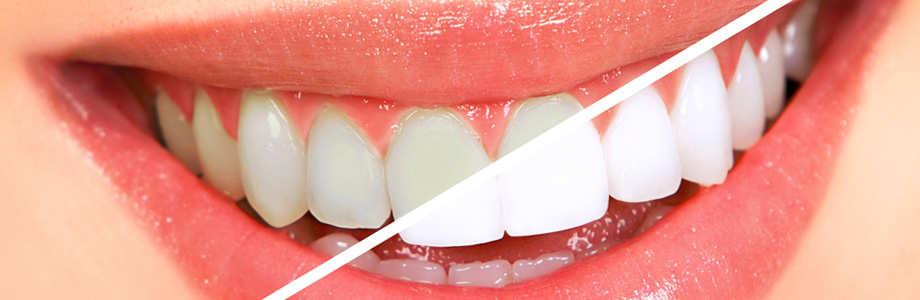
Why teeth whitening?
With sparkling teeth we all start. But over the time, factors like age, accidents or lifestyle habits cause the enamel on the surface of the teeth to be worn out and hence allowing the yellow core to be made visible, which gives a dull appearance on the outlook. Stains and debris get accumulated and trouble your confidence with their tampered effects. Now in such situations, to restore a sparkling smile back to the face, Teeth whitening helps.
Type of stains:
There are two types of stains. Extrinsic stains are common ones that appear on the teeth’s surface as a result of the exposure to beverages, tobacco or foods. These superficial stains can be removed by proper brushing. Intrinsic stains are stubborn stains that are formed in the interior of the teeth. Intrinsic stains are those that are formed on the interior of teeth as a result of aging, accident, excessive fluoride ingestion, etc. This warrants a regular dental procedure to correct the discoloration extending from few months to a year. At times, when results don’t turn fruitful, the option of Dental veneers is sported.
What Causes Tooth Staining?
- Age:Tooth color and the progressing age are directly proportional. Wear and tear naturally causes the teeth to discolor over the period of time and it is inevitable. Starting color: IT is to be noted that we are all born with an inborn teeth color, yellow-brownish or grey-greenish, which then shows up over time.
- Translucency and thinness:These are generic traits and show profoundly over time. Thicker teeth respond well to whitening process and things get fine. But then, when the case is of thin teeth, especially in the front row, then it becomes difficult for whitening to respond. Thinned teeth are one of the cases where Whitening is not found to work upon effectively.
- Eating habits:Eating excess acidic foods, drinking too much of red wine, coffee and so on, over a period of time, is bound to leave stains on your teeth. This causes the teeth surface to become more transparent and the yellow color to show through.
- Smoking habits:Nicotine causes intrinsic stains as it leaves back deep brownish deposits that become hard to correct by.
- Trauma:Accidentals falls/trauma can produce sizable cracks in teeth, causing the collection of stains and debris.
Risks related to Teeth whitening:
- Sensitivity: The teeth whitening process can cause a temporary rise in sensitivity to temperature and pressure. High concentrated bleaching agents might be the cause for this. At times, sharp pains in the middle of the front teeth called zingers, come as spontaneous waves. While sensitivity may last for a few days, at times, the case might extend to few months too and become a long time hassle.
- Gum irritation: Over 50% of people using peroxide whiteners report irritation issues in their gums. This is due to the high concentration of the bleaching agents, and usually takes time to diminish over time with proper attention.
- Technicolor teeth: In case of bonding, dental crowns or veneers, the issue is they don’t respond to whitening unlike natural teeth. So when the teeth are whitened, the surrounding teeth turn white but they remain discolored, leading to a condition called Technicolor teeth.
The procedures are of different types and it differs from person to person according to the nature of the stains. As we can see, there are few essential risks that are involved with a relatively easy teeth-whitening process too. In any case, it is advisable to take the help of a professional dentist to do the best whitening that your teeth deserves. Rainbow Dental from Sydney, open 27/7 all through the year, with its set of professional dentists offer you free consultation and excellent dental services to bank upon. Step in and check your teeth out.
